Abstract
Many students enter engineering technology programs with a limited understanding of disciplinary differences, curricular expectations, and career pathways, contributing to early dissatisfaction and attrition. To address this challenge, we developed Exploring Engineering Technology, a multidisciplinary, project-based workshop that introduces students to Mechanical, Electrical, and Computer Engineering Technology through a shared robotic systems project. This paper presents a multi-year design-based educational research (DBER) study documenting the iterative refinement and sustained implementation of the workshop across three consecutive summers (2023–2025) at a large urban public college. Using a consistent post-workshop survey administered across cohorts and aggregate student progression indicators, we examine cross-year patterns in students’ self-reported disciplinary understanding, career awareness, and preparedness for college-level expectations. The study is guided by three descriptive research questions addressing cross-year stability in student perceptions, design decisions supporting instructional transferability and program stability, and the interpretation of contextual progression indicators. Results show stable and consistently positive patterns across cohorts and instructional teams. Student progression indicators are included to provide contextual follow-up rather than causal evidence. This study contributes a replicable, design-based model for early multidisciplinary exposure in engineering technology education and provides practice-informed insights into design evolution, instructional transferability, and institutional scalability.
Keywords: engineering technology education; design-based educational research; project-based learning; multidisciplinary education; early student engagement.
© 2026 under the terms of the J ATE Open Access Publishing Agreement
Introduction
Selecting an academic major is a consequential decision that shapes students’ educational trajectories, professional identities, and long-term career opportunities [1], [2], [3]. In engineering and engineering technology programs, this decision is often made with limited prior exposure to disciplinary practices, curricular expectations, and career pathways. Prior research indicates that students’ major selection is influenced by personal interests, self-efficacy in STEM subjects, prior educational experiences, and perceptions of the engineering profession [1], [2], [3], [4], [5]. When these perceptions are incomplete or inaccurate, students may enter programs with expectations that do not align with curricular or professional realities.
Research consistently shows that many students starting engineering-related programs lack a clear understanding of what engineers and engineering technologists actually do, how the disciplines differ, or how early coursework relates to real-world applications [6], [7], [8]. Students who encounter unexpected academic rigor or fail to see the relevance of foundational coursework to professional practice are more likely to disengage or reconsider their major [9], [10]. These challenges may be amplified for students from historically underrepresented groups in engineering, who may also face barriers related to a sense of belonging, access to role models, and clarity of career pathways [11], [12], [13], [14].
Engineering technology programs face a related but distinct challenge. While closely aligned with engineering in content and rigor, engineering technology emphasizes applied learning, hands-on problem-solving, and workforce-ready skills. However, students often confuse engineering technology disciplines with each other or with traditional engineering programs, making it difficult to select the right major. In both engineering and engineering technology curricula, early coursework typically focuses on foundational theory or mathematics, delaying students’ exposure to real-world disciplinary practices and applied problem-solving. This can make it harder to recognize the differences among these fields [15], [16]. However, there is limited evidence on how early, multidisciplinary interventions in engineering technology can be sustained, adapted, and scaled across cohorts and instructional teams.
To address this gap, we developed Exploring Engineering Technology, a multidisciplinary, project-based workshop that introduces students to Mechanical, Electrical, and Computer Engineering Technology through a shared robotics project. The workshop provides early exposure to disciplinary roles, applied technical practices, and engineering technology career pathways, while also incorporating structured support for college transition. Initially implemented as a pilot in Summer 2023 and reported in a prior conference publication [17], the workshop was subsequently refined and expanded over multiple summers, serving diverse student populations and involving a larger faculty team.
This paper adopts a design-based educational research (DBER) perspective to document the iterative refinement and sustained implementation of the workshop across three consecutive summers at a large urban public college. DBER emphasizes the systematic study of educational interventions as they are designed, enacted, analyzed, and revised in authentic educational contexts, with the goal of generating practice-informed insights rather than causal or experimental claims [18], [19]. In this study, successive workshop offerings function as design iterations, enabling examination of design stability, instructional transferability, and sustainability over time.
Using a consistent post-workshop survey administered across cohorts, along with aggregate student progression indicators, this study examines cross-year patterns in students’ self-reported disciplinary understanding, career awareness, and preparedness for college-level expectations. The study documents stable patterns, design decisions, and implementation insights that may inform replication in other engineering technology programs.
This study is guided by the following descriptive research questions, consistent with a design-based educational research framework:
RQ1. To what extent are cross-year patterns in students’ self-reported disciplinary understanding, career awareness, and preparedness stable across successive offerings of the Exploring Engineering Technology workshop?
RQ2. How did the workshop design evolve across three annual iterations, and which design decisions supported instructional transferability and program stability?
RQ3. What contextual indicators of student academic progression are associated with workshop participation across cohorts, and how should these indicators be interpreted given the study’s descriptive design?
These questions are descriptive and design-oriented in nature. RQ1 is addressed through aggregate post-workshop survey data reported in Section 6. RQ2 is addressed through the design evolution narrative in Sections 4, 7, and 9. RQ3 is addressed through cohort-level progression indicators reported in Section 6.3. Consistent with DBER principles, this study does not seek to establish causal relationships between workshop participation and student outcomes, but rather to document design evolution, implementation patterns, and contextual evidence to inform replication in engineering technology programs.
The contributions of this paper are threefold. First, it presents a sustained, multi-year example of a multidisciplinary, project-based intervention designed specifically for engineering technology education. Second, it provides descriptive evidence of cross-year consistency and contextual indicators of student progression, without implying causal effects. Third, it offers actionable insights into faculty onboarding, instructional coordination, and scalability relevant to institutions seeking to implement similar early-exposure models. In addition, the paper documents early evidence of institutional uptake, illustrating how selected design principles were sustained by integrating them into first-year programming structures beyond the original workshop context.
Throughout this paper, “workshop” refers to the instructional experience, while “program” refers to the multi-year implementation of the workshop across cohorts and institutional contexts.
The remainder of this paper is organized as follows. Section 2 reviews related literature on major selection, early attrition, project-based learning, and design-based educational research. Section 3 describes the workshop design and initial pilot. Section 4 documents the program’s evolution across three years. Section 5 describes the study’s methods. Section 6 presents results and discussion. Sections 7 and 8 address faculty transferability and limitations, respectively. Section 9 discusses implications for replication, and Section 10 presents conclusions and directions for future work.
Related Work
Whereas the Introduction situates the specific challenge addressed by this study, this section provides a broader review of the research literature across four intersecting domains: factors influencing engineering major selection, early attrition in engineering programs, project-based and multidisciplinary learning approaches, and design-based educational research as a framework for studying educational interventions. This review aims to establish the domain-specific knowledge base within which the present work is situated.
Research on students’ selection of engineering and engineering technology majors indicates that major choice is shaped by prior experiences, perceptions of disciplinary work, self-efficacy, and expectations about career outcomes [1], [2], [3], [4]. Pre-college exposure to STEM subjects and early encounters with engineering contexts influence both entry into and persistence within engineering-related pathways [5], [20]. However, many students begin these programs with a limited understanding of how disciplines differ in practice or how academic coursework maps onto professional roles [6], [7], [8], contributing to misaligned expectations early in the curriculum.
A substantial body of literature has examined factors associated with early attrition and major switching in engineering programs, particularly during the first year. Prior studies link attrition to mismatches between student expectations and curricular demands, challenges in foundational coursework, and limited opportunities to engage with authentic engineering practice early on [21], [22], [23]. These challenges may be further compounded for students from historically underrepresented groups, who often face additional barriers related to access, belonging, and clarity of career pathways [12], [13], [14].
Project-based learning (PBL) and multidisciplinary instructional approaches have been widely proposed as strategies to address these challenges by contextualizing abstract concepts and making disciplinary practices visible [24], [25], [26]. Prior studies suggest that hands-on, project-centered experiences can support students’ understanding of disciplinary roles and professional contexts, particularly when projects require coordination across multiple fields [25], [27], [28], [29], [30]. Multidisciplinary PBL approaches, in particular, have been shown to help students understand how different engineering disciplines contribute to complex systems and to foster collaboration across disciplinary boundaries [25], [30]. Within engineering technology education, where applied learning and workforce relevance are central, PBL has been used to bridge theory and practice and to introduce students to authentic technical tasks earlier in academic pathways [15].
Despite these contributions, much of the existing literature focuses on single-course implementations, short-term interventions, or one-time pilot studies. Fewer studies document how multidisciplinary, project-based interventions are refined over time, scaled across cohorts, or transferred across instructional teams while maintaining pedagogical coherence, particularly within engineering technology programs. Design-based educational research (DBER) has been proposed as a suitable framework for studying such complex educational interventions in authentic settings, emphasizing iterative refinement and practice-informed insights [18], [19]. However, relatively little work applies this approach to early, multidisciplinary engineering technology interventions that are sustained over multiple years.
Several studies have examined summer bridge programs and early-exposure workshops as mechanisms for supporting student transition into STEM programs, with findings suggesting positive effects on self-efficacy, belonging, and retention [20], [21]. However, these programs have rarely been designed around multidisciplinary, project-centered experiences or studied through iterative, design-based methods. Within engineering technology specifically, PBL-based introductions to disciplinary work remain underrepresented in the research literature compared to traditional engineering programs, and few studies document how such interventions are adapted and sustained across multiple years and instructional teams.
The present study addresses this gap by applying a DBER lens to the iterative development and sustained implementation of a multidisciplinary engineering technology workshop over three consecutive years, with attention to design stability, instructional transferability, and contextual indicators of student progression. Although some referenced literature spans both engineering and engineering technology contexts, this study focuses specifically on engineering technology programs.
Program Design and Initial Pilot Phase
The Exploring Engineering Technology Workshop was designed to provide students with early, applied exposure to multiple engineering technology disciplines within a single, coherent learning experience. The primary design goal was to help students differentiate among Mechanical, Electrical, and Computer Engineering Technology by engaging them in authentic tasks that reflect how these disciplines interact in practice. Rather than introducing disciplines in isolation, the workshop centered on a shared system-level project requiring coordinated contributions from each field.
Design Goals and Pedagogical Rationale
The workshop was guided by three core design goals: (1) supporting informed major selection by making disciplinary roles explicit early in students’ academic pathways; (2) emphasizing the applied, hands-on nature of engineering technology aligned with workforce-relevant practices; and (3) fostering multidisciplinary awareness by highlighting how different engineering technology disciplines contribute to an integrated system.
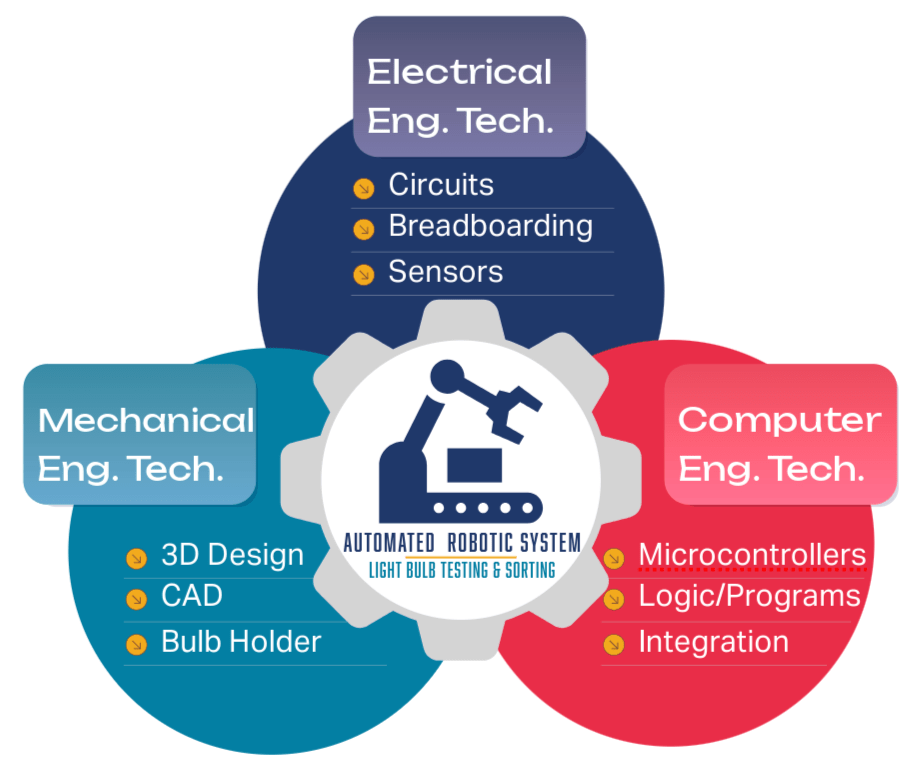
To support these goals, the workshop adopted a project-based learning approach in which students collaborated on a single shared artifact rather than completing discipline-specific exercises. This approach was intended to connect abstract concepts to tangible outcomes while foregrounding the interdependence of mechanical, electrical, and computational components. Fig. 1 illustrates the multidisciplinary curriculum framework that guided the workshop design.
Multidisciplinary Project Structure
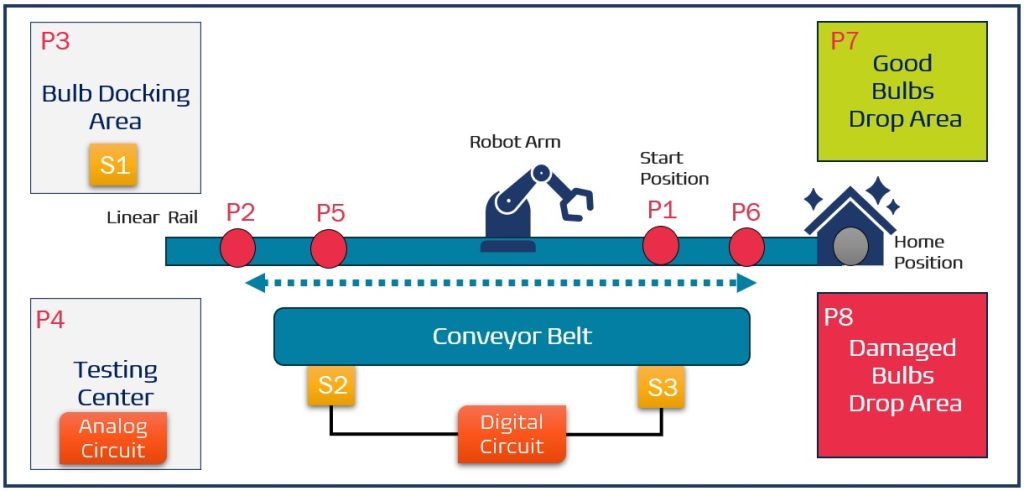
At the center of the workshop was a robotic systems project (depicted in Fig. 2) that served as a unifying context for instructional activities across disciplines. The project involves an automated production line designed to distinguish between good and bad LED light bulbs and sort them accordingly. The project was intentionally scoped to be achievable within a short, intensive summer format (four weeks, approximately twelve hours per week) while still requiring meaningful contributions from each engineering technology area.
Mechanical Engineering Technology activities focused on physical structure, motion, and system assembly; Electrical Engineering Technology emphasized basic circuits, sensing, and hardware interfacing; and Computer Engineering Technology introduced programming logic, control flow, and system coordination. While students were not expected to develop mastery across all areas, the project required them to understand how disciplinary components interacted to produce a functioning system. Instructional activities were sequenced from component-level understanding to system-level integration, reinforcing the idea that engineering technology practice involves iterative testing, troubleshooting, and cross-disciplinary coordination rather than the linear execution of isolated tasks.
Workshop Format and Learning Activities
The initial pilot was delivered as an intensive summer workshop combining short instructional segments with guided, hands-on project work. Sessions introduced key concepts through brief demonstrations, followed by activities that allowed students to apply those concepts directly within the project context.
Students worked in small teams to support collaboration and peer learning, with faculty providing guidance through structured checkpoints aligned with project milestones. In addition to technical content, the workshop included explicit discussion of disciplinary roles, engineering technology career pathways, and expectations for college-level coursework.
Assessment during the pilot phase was formative, focused on supporting student learning and informing design refinement, rather than evaluating performance. A post-workshop survey was used to collect students’ self-reported perceptions of disciplinary understanding, career awareness, and preparedness.
Program Evolution Across Three Years
The Exploring Engineering Technology workshop was implemented over three consecutive summers (2023–2025), evolving from a single-section pilot to a multi-section offering involving multiple faculty instructors and student populations. Across all completed years, the workshop maintained a consistent multidisciplinary structure centered on a shared robotic systems project, while incorporating iterative refinements informed by prior implementations. This section documents the workshop’s evolution across these three years, highlighting changes in scale, instructional organization, and design decisions across successive iterations. Table 1 summarizes the number of students and the composition of participants for each workshop section. Student Type indicates whether participants were incoming first-year students, current first-year students, or a mixed cohort. Mixed sections included both incoming and enrolled students; detailed demographic characteristics are not disaggregated due to cohort size and the descriptive focus of the study.
Table 1. Workshop participation by year and section (2023–2025)
| Year | Section | Number of Students (n) | Student Type |
| 2023 | Section 1 | 10 | Incoming first-year |
| 2024 | Section 1 | 16 | Current first-year |
| 2024 | Section 2 | 13 | Mixed |
| 2025 | Section 1 | 15 | Current first-year |
| 2025 | Section 2 | 11 | Mixed |
First Design Iteration: Single-Section Pilot (Summer 2023)
The workshop was initially developed and offered in Summer 2023 as a pilot designed to introduce students to Mechanical, Electrical, and Computer Engineering Technology through an intensive, project-based experience. The pilot consisted of a single section delivered over a short summer term and was taught by a small instructional team directly involved in the workshop’s design.
Students worked collaboratively on the robotic systems project, requiring contributions from each discipline, including mechanical structure and motion, basic electrical circuits and sensing, and introductory programming and logic. The pilot emphasized hands-on engagement, explicit discussion of disciplinary roles, and exposure to applied engineering technology practices. Feedback from this initial cohort, collected through a post-workshop survey and instructional observations, informed subsequent refinements to both curriculum and delivery.
The 2023 pilot, previously reported in a conference publication, served as the first design iteration within the design-based educational research framework guiding this work [17]. Rather than functioning as a standalone intervention, the pilot established the feasibility of the multidisciplinary project structure and served as the foundation for the sustained implementation and refinement cycle documented in the sections that follow.
Scaling and Instructional Refinement: Two-Section Expansion (Summer 2024)
In Summer 2024, the workshop expanded to two sections, reflecting increased interest and institutional support. This expansion enabled the workshop to serve a larger and more diverse group of students while preserving the core multidisciplinary structure established during the pilot year.
Several refinements were introduced during this second year. Instructional materials were reorganized to improve clarity and pacing, and project milestones were adjusted to provide earlier exposure to system-level integration. These changes were intended to help students more clearly understand how individual disciplinary components contributed to the overall robotic system.
The 2024 offerings also marked the initial involvement of an additional faculty member. While the core project, learning objectives, and assessment instruments remained consistent across sections, instructors were encouraged to adapt examples and demonstrations in alignment with their disciplinary expertise. Shared lesson outlines and coordinated project checkpoints supported instructional coherence across sections.
Stabilization and Faculty Growth: Multi-Section Implementation (Summer 2025)
The workshop continued in Summer 2025 with two additional sections, further establishing it as a recurring offering rather than a one-time pilot. By this third year, the workshop benefited from accumulated instructional experience and prior refinements, resulting in smoother coordination and clearer expectations for both students and instructors.
Faculty participation expanded during this period, with instructors from multiple engineering technology disciplines contributing to delivery. To support instructional transferability, the teaching team relied on a common set of instructional materials, a shared project framework, and a consistent post-workshop survey instrument. At the same time, instructors retained flexibility in pacing and instructional emphasis to respond to the needs of their specific student cohorts.
Although objective technical testing was not conducted, student performance was validated by the successful completion of project milestones. In all three years (2023–2025), 100% of participating student teams successfully completed the integration of the mechanical structure, sensor circuitry, and microcontroller logic, resulting in a functional automated light-bulb sorting prototype.
Design Stability, Iterative Refinement, and Continued Institutional Commitment
Viewed through a design-based educational research lens, the changes described across the 2023–2025 offerings reflect intentional iterative refinement rather than ad hoc modification. Core elements, including the shared multidisciplinary project, applied orientation, and emphasis on disciplinary differentiation, remained stable, enabling meaningful cross-year comparison. At the same time, refinements to instructional sequencing, faculty coordination, and student support were introduced in response to observations and feedback from earlier implementations.
Building on lessons learned from the three completed years, the workshop is planned to continue into a fourth year in Summer 2026, with multiple sections anticipated. While data from the 2026 implementation are not included in this study, the planned continuation reflects sustained institutional commitment. This progression, from pilot to recurring, multi-section offering, illustrates how a multidisciplinary, project-based workshop can evolve into a stable component of an engineering technology program while remaining adaptable to instructional and contextual needs. In parallel with this iterative stabilization, selected design principles from the workshop were taken up within broader first-year programming structures at the institutional level, a development examined later in the paper.
Methods
Study Context and Design-Based Research Framework
This study employs a design-based educational research (DBER) approach to examine the sustained implementation and iterative refinement of a multidisciplinary, project-based engineering technology workshop. Design-based educational research focuses on the systematic study of educational interventions as they are designed, enacted, analyzed, and revised within authentic educational settings, with the goal of generating practice-informed insights rather than causal or experimental claims [18], [19].
Because this work relies exclusively on aggregate, program-level data and does not involve the collection or analysis of identifiable student information, it was conducted without institutional review board (IRB) approval and is limited to descriptive analyses and programmatic reporting.
Within this framework, Exploring Engineering Technology was developed, implemented, and refined over four consecutive summer offerings at a large urban public college. Although four offerings have occurred to date, this study reports data from the three completed cohorts (2023–2025). The initial pilot implementation served as the first design iteration and was previously reported in a conference publication. Subsequent offerings incorporated refinements to instructional materials, scheduling, and faculty participation while maintaining the core project, learning objectives, and assessment instruments. Each year’s implementation informed subsequent design decisions, consistent with DBER principles.
The purpose of this study is not to evaluate the causal impact of the workshop, but rather to document its evolution, examine descriptive patterns across cohorts, and identify design features and implementation strategies that may inform replication in other engineering technology programs.
Participant Populations and Workshop Implementation Across Cohorts
Participants were students enrolled in summer offerings of the Exploring Engineering Technology workshop across four years. The workshop served different student populations over time, including incoming first-year students, current first-year engineering technology students, and mixed cohorts, depending on the year and session. Participation was voluntary, and enrollment was limited by available instructional resources and laboratory capacity.
In later years, the workshop expanded to include multiple sessions per summer and additional faculty from the Mechanical, Electrical, and Computer Engineering Technology disciplines. Although instructional teams varied across sessions, the workshop maintained a shared multidisciplinary structure, a common robotic systems project, and aligned learning objectives. This consistency supported cross-year comparisons of aggregate survey responses and enabled examination of instructional transferability across faculty teams.
No individual-level demographic identifiers are reported. Participant characteristics are presented only in aggregate form to contextualize the populations served by the workshop.
Data Sources: Post-Workshop Survey Instrument and Progression Indicators
This study draws on two primary data sources: (1) a post-workshop survey administered consistently across cohorts and (2) aggregate student progression indicators collected after workshop completion.
Post-Workshop Survey Instrument. A post-workshop survey was developed to assess students’ self-reported understanding of engineering technology disciplines, awareness of engineering career pathways, perceptions of teamwork and multidisciplinary collaboration, and preparedness for college expectations. The same survey instrument was administered at the conclusion of each workshop offering across all cohorts included in this study.
Survey items used a Likert-type response scale to capture levels of agreement with statements related to disciplinary understanding, skill development, and confidence. The survey functioned as a formative assessment tool to inform instructional refinement rather than as a psychometric instrument intended for inferential statistical analysis. Only aggregate survey results are reported.
Student Progression Indicators. To provide contextual follow-up information, aggregate student progression indicators were collected for workshop participants across the three completed cohorts. These indicators include first-semester grade point averages (GPA), retention in the subsequent academic term, and persistence in the student’s original engineering technology major.
These data were obtained from institutional records and summarized at the cohort level. The indicators are included to contextualize students’ early academic trajectories following workshop participation and are not used to attribute outcomes directly to the intervention.
Analytic Approach, Methodological Scope, and Constraints
In addition to the post-workshop survey, instructors used formative, rubric-guided milestone checks and evaluation of project artifacts to support instructional feedback during the workshop. These assessments were not designed to produce standardized or comparable measures of technical competency across cohorts and, therefore, are not analyzed in this study. Data analysis is descriptive and aligned with the goals of design-based educational research. Survey responses were summarized using measures of central tendency to examine cross-year patterns and stability in students’ self-reported perceptions. Student progression indicators were summarized at the cohort level to provide contextual information about participants’ academic progression.
All analyses rely exclusively on aggregate, program-level data. No individual-level or identifiable student data were collected, analyzed, or reported, and no causal claims are made regarding the effects of workshop participation.
No inferential statistical analysis was conducted in this study. This is a deliberate methodological choice consistent with the design-based educational research framework guiding this work, in which descriptive pattern documentation and design insight generation, rather than causal inference or hypothesis testing, are the primary goals [18], [19]. Additionally, cohort sizes across the three years (ranging from 10 to 29 participants) are insufficient to support robust inferential claims. For the same reasons, no control or comparison group was employed. The absence of a pre-/post-design and a comparison condition reflects the practical and ethical constraints of studying a voluntary, early-exposure program in an authentic educational context, and is acknowledged as a limitation in Section 8 rather than as a methodological omission.
Several constraints shape the interpretation of these findings. Participation was voluntary, cohort sizes were relatively small, and no comparison or control group was employed. The analytic approach is appropriate for the study’s purpose: documenting sustained implementation, iterative refinement, and practical design insights from a multidisciplinary engineering technology workshop enacted in an authentic educational context.
Results and Discussion
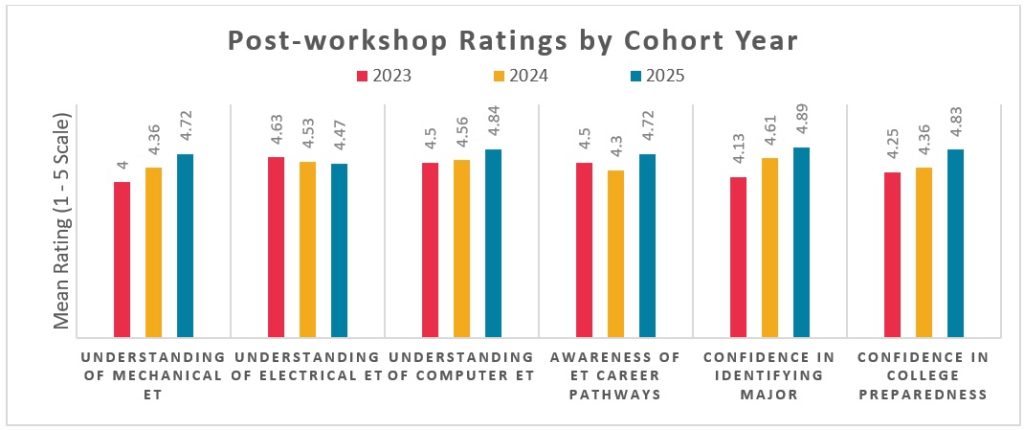
Table 2 summarizes aggregate post-workshop survey results across three consecutive offerings of the Exploring Engineering Technology workshop (2023–2025). As shown in Fig. 3, across all cohorts, students self-reported consistently high levels of perceived disciplinary understanding, career awareness, and preparedness, with mean ratings exceeding 4.0 on a five-point Likert scale for all reported constructs.
Throughout all three years, every student team (100%) successfully demonstrated a fully operational Light Bulb Testing and Sorting system by the end of the workshop, providing performance-based evidence that they could integrate mechanical, electrical, and computational components into a working system within the given timeframe.
Table 2. Aggregate post-workshop survey results by year (2023–2025)
| Survey Item | 2023 Mean | 2024 Mean† | 2025 Mean† |
| Understanding of Mechanical Engineering Technology | 4.00 | 4.36 | 4.72 |
| Understanding of Electrical Engineering Technology | 4.63 | 4.53 | 4.47 |
| Understanding of Computer Engineering Technology | 4.50 | 4.56 | 4.84 |
| Awareness of engineering technology career pathways | 4.50 | 4.30 | 4.72 |
| Confidence in identifying an appropriate major | 4.13 | 4.61 | 4.89 |
| Confidence in preparedness for college-level expectations | 4.25 | 4.36 | 4.83 |
Disciplinary Understanding, Career Awareness, and Preparedness
As shown in Fig. 3, students’ self-reported understanding of Mechanical, Electrical, and Computer Engineering Technology remained strong and stable across years, with mean ratings consistently in the high-agreement range. Students also reported sustained awareness of engineering technology career pathways and increasing confidence in identifying an appropriate major across cohorts. These patterns align with the workshop’s primary objective of supporting informed exploration of engineering technology disciplines through a shared, multidisciplinary project rather than early specialization.
Students’ perceived preparedness for college-level expectations also remained high across all years, with mean ratings consistently above 4.0, suggesting that the workshop supported students in contextualizing academic expectations alongside technical skill development. This finding is particularly relevant given that several cohorts included both incoming and current first-year students. Taken together, these results suggest that the workshop design provided a coherent framework for simultaneously supporting disciplinary understanding, career awareness, and academic transition, even as cohort composition and instructional teams varied.
Cross-Year Consistency and Instructional Transferability
Across three consecutive summers, the survey results exhibit stable patterns with no substantial decline as the workshop scaled from a single pilot section to multiple sections taught by different faculty members. This consistency suggests that the workshop’s core design elements, including a shared multidisciplinary project, structured team roles, and coordinated faculty facilitation, were effectively transferred across instructors and cohorts without degradation in student-reported experiences.
It is important to emphasize that these findings are descriptive and based on self-reported data. No causal claims are made regarding student learning or persistence. Rather, the observed cross-year consistency provides early descriptive evidence of design stability and instructional robustness across implementations.
Student Progression Indicators
Table 3. Aggregate student progression indicators for workshop participants by cohort year
| Cohort Year | Number of Participants (n) | Mean First-Semester GPA† | Retention to Next Semester (%) | Persistence in Engineering or Engineering Technology Major (%) |
| 2023 | 10 | 2.80 | 70.0 | 70.0 |
| 2024 | 29 | 2.15 | 68.9 | 68.9 |
| 2025 | 26 | 2.90 | 88.4 | 88.4 |
| † Mean First-Semester GPA refers to the GPA earned during the first fall semester following workshop participation. For these cohorts, all retained students remained enrolled in their original engineering or engineering technology majors; therefore, retention and persistence percentages are identical. Indicators are reported for descriptive context only. | ||||
Because cohorts included a mix of incoming and current first-year students, progression indicators reflect heterogeneous academic starting points and should be interpreted only at the aggregate, descriptive level, rather than as comparative or evaluative measures. Table 3 presents aggregate indicators of student progression for workshop participants across cohorts. Mean first-semester GPA values ranged from 2.15 to 2.90, reflecting the academic diversity of participating students. Retention and persistence rates ranged from 68.9% to 88.4%, with all retained students remaining enrolled in their original engineering or engineering technology majors. The study tracked persistence among students who remained enrolled at the institution; outcomes for students who did not continue at the college, including potential major switching or transfer, were not available for analysis. These findings provide descriptive evidence of stability rather than statistically validated differences across cohorts.
Faculty Expansion and Instructional Transferability
A central objective of the Exploring Engineering Technology workshop was to develop an instructional model that could be adopted and sustained beyond its original designers. As the program expanded from a single pilot section to multiple sections taught by different instructors, faculty expansion became a key design consideration. This section examines how the workshop was transferred across instructors and identifies features that supported instructional coherence while allowing disciplinary flexibility.
Faculty Onboarding and Instructional Coordination
During the initial 2023 pilot, the workshop was delivered by faculty members directly involved in its design. As the program expanded in 2024 and 2025, additional instructors from Mechanical, Electrical, and Computer Engineering Technology joined the teaching team, bringing diverse disciplinary perspectives and varying levels of familiarity with project-based pedagogy.
To support effective onboarding, instructors relied on a shared set of core materials, including common learning objectives, a standardized multidisciplinary project framework, and aligned post-workshop assessment instruments. These resources served as an instructional backbone, ensuring a consistent student experience across sections while reducing instructor-specific variability. Regular coordination among instructors prior to and during the workshop further supported alignment.
Rather than prescribing uniform instructional scripts, the onboarding approach emphasized clarity around essential design elements while allowing instructors autonomy in instructional delivery. This balance aligns with the applied nature of engineering technology education, in which disciplinary emphasis and instructional pacing may vary while still contributing to shared learning goals. Instructional fidelity was supported by shared project frameworks, aligned learning objectives, coordinated milestones, and common assessment instruments, rather than by formal train-the-trainer sessions.
Design Elements Supporting Instructional Transferability
As the workshop scaled, the instructional team distinguished between non-negotiable design elements and adaptable instructional components. Core elements included a shared multidisciplinary project, explicit discussion of disciplinary roles, and coordinated project milestones that required integration across mechanical, electrical, and computational components. These elements were central to the workshop’s goal of helping students understand how engineering technology disciplines differ and interact in practice.
At the same time, instructors were encouraged to adapt examples, demonstrations, and pacing based on their disciplinary expertise and student cohort needs. This combination of standardization and flexibility supported instructional authenticity while preserving coherence across sections. From a design-based educational research perspective, this transferability reflects the stability of the workshop’s core design rather than replication of specific teaching behaviors.
Institutional Uptake and Design Influence
Beyond faculty-level transferability, the workshop’s sustainability is further evidenced by its institutional uptake within the college’s First-Year Programs. While initially developed with support from a Title V grant, the workshop was co-sponsored by First-Year Programs in 2024 and transitioned to First-Year Programs’ ownership in Summer 2025, where it is now offered as a recurring, optional summer experience for incoming and early-career students. This transition reflects institutional commitment to sustaining the workshop beyond its original funding context.
In parallel, several of the workshop’s design principles have informed broader structures for first-year programming. In particular, the adoption of cluster-based First-Year Learning Communities, which group students by broad academic domains rather than individual majors, reflects the workshop’s emphasis on early disciplinary exploration across related fields. These communities incorporate discovery-oriented activities focused on disciplinary roles, career pathways, and areas of overlap across fields.
From a design-based educational research perspective, this institutional uptake provides evidence of design relevance, transferability, and sustainability at the program level. Rather than remaining confined to a single intervention, key design elements have informed broader curricular structures, suggesting that multidisciplinary, project-based approaches can extend beyond pilot implementations to influence institutional practices.
This institutional influence is not presented as evidence of instructional effectiveness or student-level outcomes. Instead, it illustrates how design concepts originating in a focused intervention can inform institution-level programming while remaining adaptable to new contexts. No formal evaluation of these institution-level adaptations was conducted as part of this study.
Limitations
The findings of this study provide insight into the iterative design and sustainability of a multidisciplinary engineering technology workshop; however, several limitations should be considered when interpreting the results.
Self-Selection and Motivation Bias
Participation in the Exploring Engineering Technology workshop was voluntary, which may introduce potential self-selection bias. Students who chose to enroll in an intensive summer program may have entered with higher levels of motivation, STEM self-efficacy, or interest in engineering technology than the broader student population. As a result, reported perceptions of disciplinary understanding and career awareness may reflect participant predispositions rather than being attributable solely to the workshop.
Reliance on Self-Reported Data
The study relies primarily on self-reported Likert-scale survey data to examine students’ perceptions of disciplinary understanding, career awareness, and preparedness. While these measures provide insight into student confidence and perceived learning, they do not constitute objective assessments of technical knowledge or skill mastery. Accordingly, survey results are interpreted as descriptive indicators of student perceptions rather than as evidence of verified learning gains.
Heterogeneity of Cohorts and Progression Indicators
Participant composition varied across years, including incoming first-year students, current students, and mixed cohorts. This heterogeneity complicates the interpretation of aggregate progression indicators such as mean first-semester GPA and retention rates. Observed variation in these indicators coincides with differences in cohort composition and academic starting points; however, the study does not include a matched comparison group or additional contextual data sufficient to explain these differences. Consequently, progression indicators are reported for descriptive context only and are not used to attribute academic outcomes to workshop participation.
Scope and Institutional Context
This study was conducted at a single large urban public institution and reflects the local context, resources, and student population of that setting. While the workshop was designed with transferability in mind, implementation and outcomes may differ in other institutional contexts. In addition, the absence of institutional review board (IRB) approval limits the analysis to aggregate, program-level reporting, constraining the types of analyses that can be performed. The study does not capture outcomes for students who left the institution, including whether workshop participation influenced decisions to transfer to other institutions.
Survey Instrument Validation
The post-workshop survey instrument was developed as a formative program-evaluation tool and was not subjected to formal psychometric validation. Reliability testing, such as internal consistency analysis using Cronbach’s alpha and construct validity analysis, was outside the scope of this study, given its descriptive, design-based purpose. As a result, the survey items should be interpreted as indicators of student self-perception rather than as validated measures of disciplinary knowledge or learning. Future iterations of this work should prioritize instrument validation, including reliability analysis and review by content and measurement experts, to strengthen the evidentiary basis for cross-year comparisons.
Implications for Replication in Engineering Technology Education
Whereas the previous section, Faculty Expansion and Instructional Transferability, documents how instructional transferability and institutional uptake unfolded within this institutional context, this section distills broader design implications for engineering technology programs seeking to implement similar early-exposure models. The multi-year implementation of Exploring Engineering Technology offers several implications for programs aiming to support early student engagement, informed major selection, and disciplinary clarity through applied, project-based experiences. Rather than presenting a prescriptive model, this section highlights transferable design principles that may be adapted to varied institutional contexts.
Early Multidisciplinary Exposure as a Design Strategy
One key implication is the value of providing early, multidisciplinary exposure to engineering technology disciplines through a shared project experience. Engaging students in system-level tasks that require contributions from mechanical, electrical, and computational fields makes disciplinary distinctions explicit while also illustrating how these fields intersect in practice. This approach may help students develop more informed expectations about their majors before becoming deeply committed to a specific pathway.
For institutions seeking replication, the specific technological platform or project theme is less important than the underlying design principle: students should encounter authentic, applied tasks that require coordinated contributions from multiple disciplines within a coherent system.
Identifying Stable Design Elements
The sustained implementation of the workshop underscores the importance of clearly distinguishing between stable design elements and adaptable instructional components. Core elements, such as a shared multidisciplinary project, aligned learning objectives, and coordinated project milestones, served as anchors that preserved pedagogical intent across implementations.
Programs considering replication may benefit from explicitly identifying their own non-negotiable design elements early in the development process. Doing so can support instructional coherence while still allowing flexibility in instructional delivery based on disciplinary expertise and local context.
Faculty Collaboration and Resource-Conscious Scaling
The workshop’s expansion highlights the role of modest faculty coordination structures in supporting multidisciplinary initiatives. Shared instructional materials, common learning goals, and lightweight coordination mechanisms enabled instructors from different disciplines to contribute effectively.
From a replication perspective, this suggests that large-scale curricular redesign is not a prerequisite for early-exposure initiatives. Programs operating under resource constraints may still implement similar models by leveraging existing laboratory infrastructure, faculty expertise, and limited coordination mechanisms.
Replication Within a Design-Based Improvement Paradigm
Finally, this study illustrates the value of approaching early-exposure initiatives as part of an ongoing design-based improvement process rather than as fixed interventions. Iterative refinements over multiple years enabled the workshop to evolve incrementally without sacrificing coherence or necessitating wholesale redesign.
For institutions considering adoption, framing replication efforts within a design-based educational research or continuous improvement paradigm may support reflective practice, evidence-informed decision making, and long-term sustainability. Importantly, replication does not require direct duplication of the original workshop; rather, design principles such as early disciplinary exposure, structured career exploration, and facilitated comparison among related fields can be adapted to inform broader first-year programming aligned with local institutional priorities.
Conclusion
This paper presents a multi-year, design-based educational research study examining the development, refinement, and sustained implementation of Exploring Engineering Technology, a multidisciplinary, project-based workshop that provides early exposure to engineering technology disciplines. Implemented over three consecutive summers (2023–2025), the workshop evolved from an initial pilot into a multi-section offering involving multiple instructors and student populations, while maintaining a stable core design centered on a shared robotics project.
Across iterations, the workshop demonstrated design stability alongside intentional refinement, consistent with DBER principles. Descriptive survey results revealed stable patterns in students’ self-reported understanding of disciplinary roles, career awareness, and preparedness, while aggregate student progression indicators provided contextual insight into early academic trajectories. Although no causal claims are advanced, these findings are consistent with the idea that thoughtfully designed, early multidisciplinary experiences can help students develop clearer expectations about engineering technology pathways.
Beyond student-facing experiences, this study contributes to the engineering technology education literature by foregrounding instructional transferability and sustainability as explicit design considerations. The expansion of the workshop across instructors and sections highlights the value of distinguishing between stable pedagogical elements and adaptable instructional practices to maintain coherence under realistic instructional and resource constraints. In addition, the institutional uptake of selected design principles within the college’s First-Year Programs, alongside the transition from grant-supported development to recurring institutional ownership, demonstrates programmatic sustainability without implying student-level outcomes.
Future work will focus on continued implementation of the workshop, including refinement of instructional scaffolding for teamwork, expanded use of descriptive longitudinal indicators, and exploration of complementary qualitative data sources such as student reflections. With appropriate approvals, future work will examine individual-level learning artifacts and longer-term outcomes such as upper-division persistence and internship participation. This work demonstrates how design-based educational research can generate transferable, practice-informed insights by documenting the iterative refinement, stabilization, and sustained use of multidisciplinary, project-based interventions in authentic engineering technology contexts. Importantly, the findings suggest that such interventions can extend beyond pilot implementations to influence instructional practices and institutional structures, supporting broader adoption in engineering technology education.
Acknowledgments. This work was supported by the U.S. Department of Education Title V grant City Tech STEM Success Collaborative (2021–2026), Project Number P031S2210228. The authors acknowledge Shelley Smith, Project Director, for her leadership and support of this initiative. The authors also thank Amy A. Germuth, Founder and President of EvalWorks, for her contributions to the development and analysis of the student survey instrument. Finally, the authors acknowledge support from City Tech First-Year Programs, especially the Director, Lauri Aguirre.
Disclosures. The authors declare no conflicts of interest.
[1]. W. Alexan, “Identifying the Motivational Influences on Students’ Choice of Engineering Major,” 2022 IEEE Global Engineering Education Conference (EDUCON), pp. 1502–1511, 2022, doi: 10.1109/EDUCON52537.2022.9766536.
[2]. P. López, P. Simó, and J. Marco, “Understanding STEM career choices: A systematic mapping,” Heliyon, vol. 9, no. 6, p. e16676, Jun. 2023, doi: 10.1016/j.heliyon.2023.e16676.
[3]. J. B. Main, A. L. Griffith, X. Xu, and A. M. Dukes, “Choosing an engineering major: A conceptual model of student pathways into engineering,” Journal of Engineering Education, vol. 111, no. 1, pp. 40–64, 2022, doi: 10.1002/jee.20429.
[4]. X. Wang, “Why Students Choose STEM Majors,” American Educational Research Journal, vol. 50, pp. 1081–1121, 2013, doi: 10.3102/0002831213488622.
[5]. L. A. Phelps, E. Camburn, and S. Min, “Choosing STEM College Majors: Exploring the Role of Pre-College Engineering Courses,” Journal of Pre-College Engineering Education Research (J-PEER), vol. 8, no. 1, Feb. 2018, doi: 10.7771/2157-9288.1146.
[6]. J. Cruz and N. Kellam, “Beginning an Engineer’s Journey: A Narrative Examination of How, When, and Why Students Choose the Engineering Major: Beginning an Engineer’s Journey,” Journal of Engineering Education, vol. 107, Dec. 2018, doi: 10.1002/jee.20234.
[7]. H. Petroski, “Choosing a Major,” ASEE Prism, vol. 30, no. 5, p. 80, Feb. 10, 2021.
[8]. E. Trotskovsky, W. Shlomo, N. Sabag, and O. Hazzan, “Students’ Misunderstandings and Misconceptions in Engineering Thinking*,” International Journal of Engineering Education, vol. 29, pp. 1–12, Jan. 2013.
[9]. L. Nadelson, D. K. Mooney, J. Rush-Byers, and N. Dean, “Why I Am An Engineering Major: A Cross-Sectional Study of Undergraduate Students,” 2014, doi: 10.18260/1-2–23312.
[10]. M. E. Thompson, “Grade Expectations: The Role of First-Year Grades in Predicting the Pursuit of STEM Majors for First- and Continuing-Generation Students,” The Journal of Higher Education, vol. 92, no. 6, pp. 961–985, Sep. 2021, doi: 10.1080/00221546.2021.1907169.
[11]. L. M. Dos Santos, “Female Mechanical Engineering Students’ Career Decisions and Development: A Case Study of University Undergraduate Students,” Journal of Educational and Social Research, vol. 11, no. 3, May 2021, doi: https://doi.org/10.36941/jesr-2021-0046.
[12]. S. González-Pérez, M. Martínez-Martínez, V. Rey-Paredes, and E. Cifre, “I am done with this! Women dropping out of engineering majors,” Front Psychol, vol. 13, p. 918439, Aug. 2022, doi: 10.3389/fpsyg.2022.918439.
[13]. N. Y. Madjar, B. Huey, and L. Shor, “Parental Support and Acceptance Determines Women’s Choice of Engineering as a Major,” 2016. doi: 10.18260/p.25852.
[14]. V. Tandrayen-Ragoobur and D. Gokulsing, “Gender gap in STEM education and career choices: what matters?,” Journal of Applied Research in Higher Education, vol. 14, no. 3, pp. 1021–1040, Jan. 2021, doi: 10.1108/JARHE-09-2019-0235.
[15]. A. A. Zaher and I. W. Damaj, “Extending STEM Education to Engineering Programs at the Undergraduate College Level,” International Journal of Engineering Pedagogy (iJEP), vol. 8, no. 3, Art. no. 3, May 2018, doi: 10.3991/ijep.v8i3.8402.
[16]. K. Meyers and C. Brozina, “Supporting an Informed Selection of an Engineering Major,” 2017, doi: 10.18260/1-2–28886.
[17]. B. Mendoza, A. Xiao, and M. Ummy, “Exploring Engineering Technology: A Multi-Disciplinary, Project-Based Introduction to Engineering Technology,” presented at the 2024 ASEE Annual Conference & Exposition, Jun. 2024. Accessed: Jan. 30, 2026. [Online]. Available: https://peer.asee.org/exploring-engineering-technology-a-multi-disciplinary-project-based-introduction-to-engineering-technology
[18]. T. Anderson and J. Shattuck, “Design-Based Research,” Educational Researcher, vol. 41, pp. 16–25, Feb. 2012, doi: 10.3102/0013189X11428813.
[19]. “Design-Based Research: An Emerging Paradigm for Educational Inquiry,” Educational Researcher, vol. 32, no. 1, pp. 5–8, 2003, doi: 10.3102/0013189X032001005.
[20]. S. Nite, D. Rice, and R. Tejani, “Influences for Engineering Majors: Results of a Survey from a Major Research University,” Jun. 2020. doi: 10.18260/1-2–34825.
[21]. X. Chen, “STEM Attrition: College Students’ Paths into and out of STEM Fields. Statistical Analysis Report. NCES 2014-001,” National Center for Education Statistics, Nov. 2013. Accessed: Feb. 04, 2024. [Online]. Available: https://eric.ed.gov/?id=ED544470
[22]. R. M. Marra, K. A. Rodgers, D. Shen, and B. Bogue, “Leaving Engineering: A Multi-Year Single Institution Study,” Journal of Engineering Education, vol. 101, no. 1, pp. 6–27, 2012, doi: 10.1002/j.2168-9830.2012.tb00039.x.
[23]. M. Meyer and S. Marx, “Engineering Dropouts: A Qualitative Examination of Why Undergraduates Leave Engineering,” Journal of Engineering Education, vol. 103, no. 4, pp. 525–548, 2014, doi: 10.1002/jee.20054.
[24]. A. J. Parmar, “Bridging gaps in engineering education: Design thinking a critical factor for project based learning,” in 2014 IEEE Frontiers in Education Conference (FIE) Proceedings, Oct. 2014, pp. 1–8. doi: 10.1109/FIE.2014.7044081.
[25]. M. Warr and R. E. West, “Bridging Academic Disciplines with Interdisciplinary Project-based Learning: Challenges and Opportunities,” Interdisciplinary Journal of Problem-Based Learning, vol. 14, no. 1, Art. no. 1, May 2020, doi: 10.14434/ijpbl.v14i1.28590.
[26]. H. A. C. Lopera, E. Gutiérrez-Velásquez, and N. Ballesteros, “Bridging the Gap Between Theory and Active Learning: A Case Study of Project-Based Learning in Introduction to Materials Science and Engineering,” IEEE Revista Iberoamericana de Tecnologias del Aprendizaje, vol. 17, no. 2, pp. 160–169, May 2022, doi: 10.1109/RITA.2022.3166862.
[27]. C. G. P. Berdanier, “A hard stop to the term ‘soft skills,’” Journal of Engineering Education, vol. 111, no. 1, pp. 14–18, 2022, doi: 10.1002/jee.20442.
[28] M. Caeiro-Rodríguez et al., “Teaching Soft Skills in Engineering Education: An European Perspective,” IEEE Access, vol. 9, pp. 29222–29242, 2021, doi: 10.1109/ACCESS.2021.3059516.
[29] B. A. Ritter, E. E. Small, J. W. Mortimer, and J. L. Doll, “Designing Management Curriculum for Workplace Readiness: Developing Students’ Soft Skills,” Journal of Management Education, vol. 42, no. 1, pp. 80–103, Feb. 2018, doi: 10.1177/1052562917703679.
[30] S. Brunhaver, R. Korte, S. Barley, and S. Sheppard, “Bridging the Gaps between Engineering Education and Practice,” 2017. doi: 10.7208/chicago/9780226468471.003.0005.