AI Didn’t Kill the Job. It Moved the Door.

AI Is Changing Who Gets Hired First — Here’s What That Means for Our Students

A new report from EAB caught my attention this week and raises an urgent need for direct conversation within the micro-nano community about how AI shifts who gets hired.

If you work in workforce development or technical education, you’re already noticing employers’ shifting expectations due to AI. EAB’s data quantifies these changes, showing us where urgent action is required. That’s worth our attention.

(A quick note on EAB: they’ve been working in education research and advisory for about four decades, partnering with more than 2,800 organizations from K-12 through career — including a significant focus on community colleges. Their mission is to make education smarter and communities stronger, and their research team closely tracks workforce and student success trends. Worth bookmarking if you don’t already follow them.) This link gets you to their AI post.

So — what are they seeing?

EAB found that AI isn’t just changing jobs—it’s shifting entry-level opportunities, making them scarcer while stability lies in higher roles. For tech and STEM-adjacent fields, entry-level roles are declining. Even traditional pathways like IT and computer science are affected, with flat employment and rising unemployment among young workers.

This shift isn’t cause for panic, but it’s a clear signal to adapt our strategies now.

For community colleges and microelectronics programs, the message is clear: AI is altering hiring pathways, requiring a rethink of how we prepare students for the workforce.

Credentials alone aren’t enough. Employers increasingly expect new hires to contribute right away, not just to learn. We often hear that applied, hands-on experience must be more than an add-on to our programs. Are you doing this? We’d love to hear about it.

AI fluency is now a baseline skill, not a specialty. Students who can work with AI tools understand what they’re good at, where they fall short, and how to use them responsibly will have a real edge. That’s something we can teach.

Networks matter more than ever. The data on this is striking: referred job candidates advance past resume screening at four times the rate of non-referred applicants. Many of our students don’t have those networks yet. That makes us, as institutions, responsible for helping build them.

The good news is that community colleges, and particularly programs in microelectronics, are already doing a lot of this right. Hands-on lab work, employer partnerships, stackable credentials. The question is whether we’re doing it intentionally enough, given the current hiring landscape.

Let’s keep this focused conversation going inside the MNT network: how can we best respond to these AI-driven hiring shifts?

What changes are you seeing at your institution? Are your students raising these issues? Drop me a note. I read every email. TJ @ Micronanoeducation.org

— TJ

P.S. As I was writing this, I saw an announcement that EAB has an upcoming webinar on May 5, 2026: “Preparing New Graduates for an AI-Driven Workforce: Rethinking Career Readiness in Community Colleges… A data-driven look at how AI and shifting generational expectations are redefining early career opportunities.” You can find the link in the article above.

Disclosures: Nano Banana Pro helped me turn that title into an image. Grammarly and its AI helped me improve this post. Also, we do not have any formal or informal relationship with EAB. Simply a resource that we, and many of you, already read.
MNT Monthly Update: April


April 2026 MNT Monthly Update

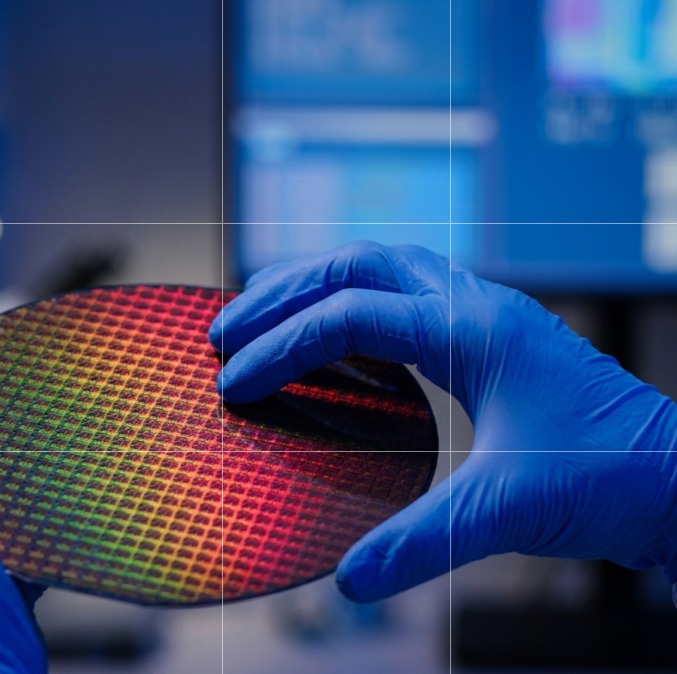
Semiconductor Wafer image

Thanks again for all the love and follows on the MNT-EC LinkedIn page — we want to keep up the momentum. Now, for the updates!


Educators: A Paid Summer Opportunity at the Intersection of AI and Semiconductors


If you teach at a community college or high school and want to get hands-on with semiconductor fabrication and AI — and get paid to do it — there’s an opportunity worth your attention right now. The deadline is April 30.


The Opportunity: AI & Semiconductors Summer Institute

Rio Salado College and Arizona State University are hosting a five-day, in-person professional development institute for educators this summer. It is aimed at Arizona educators, but all are welcome to apply (see note about no travel funds below).

June 1–5, 2026 | ASU Tempe Campus

Participants will:

  • Explore real-world AI business case studies
  • Train and deploy a practical AI model
  • Work with edge hardware
  • Experience semiconductor fabrication at a silicon fabrication facility
  • Earn an ASU Certificate of Completion

Additional benefits include a $500 stipend upon successful completion and parking validation. All are welcome to apply, but there are no travel funds available this year and there are limited spots left. Get in touch through the links and emails below.

Apply here by April 30, 2026

Questions? Contact Corey.Dorsey@asu.edu or Vinayak.Sharma@asu.edu

Downloadable Flyer you can share with peers at end of post…


The Bigger Picture: SP-ATE and Arizona’s Semiconductor Surge

This Summer Institute is part of a larger NSF-funded initiative called SP-ATE — Semiconductor Pathways in Arizona’s Technical Education — led by Rio Salado College in partnership with Arizona State University, the University of Arizona, Northern Arizona University, and the Chandler Unified School District.

The goal is to build clear, accessible pathways from high school through community college to university and into industry employment — with an emphasis on inclusive outreach and strong employer engagement.

Why Arizona? The numbers tell the story. Since 2020, Arizona has attracted more than 40 semiconductor industry expansions representing over $102 billion in capital investment and more than 15,700 direct industry jobs. The growth spans the full ecosystem — manufacturing, advanced packaging, R&D, equipment, and supply chain. The technician pipeline hasn’t kept up, and that’s precisely the gap SP-ATE is designed to close.


Join the Professional Learning Community

Can’t make the Summer Institute? Rio Salado is also forming Professional Learning Communities (PLCs) — educator cohorts that work collaboratively with industry professionals to:

  • Provide feedback on curriculum development and alignment
  • Share experiences implementing semiconductor-related instruction
  • Collaborate on the development of hands-on laboratory projects

The PLC is open to educators who want to stay connected to the semiconductor field and contribute to curriculum that actually reflects what’s happening in industry.

PLC Interest Form: https://forms.gle/dG13dETjzMjvhfyK7

For more information: stem.initiatives@riosalado.edu

Learn more about the full SP-ATE program here


SP-ATE is funded by the National Science Foundation under grants #2500695 and #2100402.

MNT-EC is a national center for micro and nanotechnology education funded by NSF ATE #2000281.


MNT-5YR-Presentation Slide

Don’t Miss: “Five Years of Building” as a review of MNT-EC’s achievements, progress, and momentum. You can give it a read at the above link.


ASU Flyer on “AI and Semiconductors Summer Institute 2026

Remembering Todd Richard Christenson

We are deeply saddened to hear of the passing of Todd Richard Christenson.

Todd was not only an early supporter of the Micro Nano Technology Education Center (MNT-EC), but one of the very first industry leaders to truly believe in our mission—and in the potential of our students. At a time when we were just getting started, Todd stepped forward, opened his doors, and invited our students into his company. That simple act created opportunities, confidence, and inspiration that continue to ripple through our program today.

Many of us will always remember those early visits—especially Todd’s humor and warmth. He welcomed our students not just professionally, but personally… even sharing pizza with them and jokingly calling them “wafers.” It was a small moment, but one that perfectly captured who he was: generous, approachable, and genuinely invested in the next generation.

Todd was also a respected leader in our community, recognized with a HI-TEC Industry Award and serving at the very beginning of our Business and Industry Leadership Team (BILT). His leadership helped shape how we engage industry partners nationwide.

What makes truly successful education and workforce programs is not just the resources, curriculum, or structure—it is the trust we build with one another and the respect we hold for the work we each do. Todd understood this deeply. He believed in people, in partnership, and in the idea that when we support each other, we create opportunities far greater than any one program alone.

Todd’s impact on MNT-EC and the broader technician workforce community cannot be overstated. He helped set the tone for what true industry partnership should look like—engaged, supportive, and centered on students.

On behalf of MNT-EC and personally, we extend our deepest gratitude for his friendship, his belief in our work, and his lasting contributions. Todd will be remembered not only for what he did, but for how he made people feel—valued, welcomed, and inspired.

Our thoughts are with his family, friends, and all who had the privilege of knowing him.

— Jared M. Ashcroft & the MNT-EC Community


You can read more about him here where the family has posted details about the Celebration of Life on April 18, 2026.