AI Video Pilot to explain first five years of MNT-EC
March 2026 MNT Monthly Update
First, we would love for you to follow us on the MNT-EC LinkedIn page — we’ve grown a ton, like by hundreds this year.
Second, we appreciate all the visits and positive notes on the News & Blog section: Think Small. We hope you’ll visit and scroll through the last few months.
Thank you for both of these growth opportunities!!
Five Years of Building Together redux
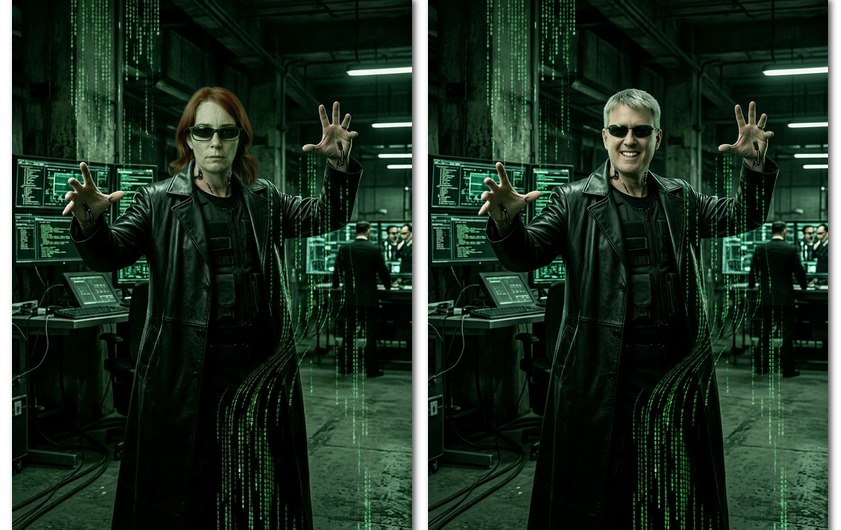
Last month, we wrote, “In a joint reflection, Dr. Jared Ashcroft and Center Director Billie Copley look back on MNT-EC’s first five years.” Then, someone had the idea to create a video of the five years… using AI tools. You can read / watch / view the results, honestly, the bloopers of that effort. We are far from done, but our fearless leaders suggested we show the journey. Please enjoy the five video takes, all AI generated, on This Week in Small.
This might pique your interest.
Here’s to another amazing five years, The Outreach Team
First: Jared and Billie have published “Five Years of Building” as a review of MNT-EC’s achievements, progress, and momentum. You can give it a read at the above link.
Expanding Access to Hands-On STEM and Technician Education: Five Initiatives to Watch
First: Jared and Billie have published “Five Years of Building” as a review of MNT-EC’s achievements, progress, and momentum. You can give it a read at the above link.
Across the country, innovative programs are reshaping how students experience science, technology, engineering, and math. Each has a strong emphasis on hands-on learning, authentic research, and workforce alignment. This month, we’re highlighting five initiatives advancing STEM education from K–12 through technician-level training, with a special shout-out to our amazing Outreach Team that has shared many of these cool projects with us!!!
The Wolbachia Project connects students and educators to authentic scientific discovery by investigating Wolbachia bacteria found in insects. Participants engage in field sampling, molecular biology, and bioinformatics, contributing to real research datasets while developing hands-on lab skills and scientific confidence. It’s a powerful example of inquiry-based STEM learning that blends classroom instruction with meaningful research.
Qolour is helping make quantum computing more accessible through interactive learning tools, guided tutorials, and structured course pathways. As quantum technologies continue to evolve, platforms like Qolour provide educators and students with approachable entry points into this advanced field, building foundational literacy in one of tomorrow’s most transformative technologies.
Editor’s Note: Jump to end of page for an embedded PDF about Qolour Activities.
Faculty at the University of Pittsburgh are partnering with Pittsburgh Public Schools through the EvolvingSTEM initiative to bring authentic biological research directly into high school classrooms. Students conduct real lab experiments, including bacterial evolution studies, gaining practical lab skills and a deeper understanding of scientific inquiry. It’s a strong model for connecting research universities with local school systems to spark early STEM engagement.
The DNA Learning Center at Cold Spring Harbor Laboratory is a nationally recognized hub for genetics and biotechnology education. Through field trips, summer camps, student research programs, and teacher professional development, the center provides immersive, lab-based learning experiences that make modern biology accessible and exciting for students and educators alike.
MNT-EC Partners with CourseArc to Strengthen Digital Curriculum Development https://www.coursearc.com
MNT-EC is partnering with CourseArc to enhance how micro and nanotechnology curriculum is developed and shared across our national network. With a flexible, WCAG 2.2 AA-compliant digital authoring platform, faculty can create interactive, accessible modules that can be adopted and adapted across institutions. This collaboration supports our broader goal of making workforce-aligned, industry-informed content easier to build, scale, and distribute nationwide.
As promised, here is the Qolour Activities PDF for viewing or download via link at end.
STEM News is an experiment in paying attention differently—and in seeing what many STEM-focused centers and projects have been doing for years, often quietly, and to uplift their work as we all try to understand and operate in a forever-changing world. By sharing these insights, readers gain practical strategies for navigating their own evolving STEM environments.
Across clean energy, advanced manufacturing, electric vehicles, automation, and other STEM-heavy fields, change happens quickly but not always transparently. Programs receive new labels, job titles shift, and new technologies emerge yearly. For students, veterans, educators, and employers, distinguishing what is genuinely new from what is merely renamed or reorganized is challenging.
Field guides don’t predict the future. They help you recognize patterns in the present.
This issue started by examining wind and solar programs, advanced manufacturing training, and electric vehicle technician pathways to uncover unifying patterns. The program area started to matter less as I kept listening to technician voices across these domains, which reveal common skills and perspectives, despite evolving technologies.
One of the richest sources for this insight has been the Talking Technicians podcast, now spanning six seasons and dozens of conversations across manufacturing, energy, electronics, automation, and emerging technologies. For years, we’ve listened closely to these episodes—creating individual pages, revisiting them, and reflecting on what technicians say about their work and careers. Not as inspiration alone, but as signal. I have downloaded all the transcripts to look for these patterns, and I’m far from done. I plan to use AI tools to help me parse it all.
And when you listen closely—really dwell with those stories—a clear pattern emerges, offering students, educators, and employers specific insight into building resilient and progressive career paths.
Technicians rarely see careers as straight lines. Instead, they describe starting practically, learning systems, and carrying those skills as opportunities arise. Certificates and associate degrees are entry points, not endpoints. Careers are a series of moves—sometimes up, sometimes sideways—guided by what someone can diagnose, maintain, or improve, not by job titles.
What’s striking is that technicians don’t frame technological change as a reset. They frame it as an adaptation. Roles evolve. Tools change. Industries shift. But core capabilities—troubleshooting, diagnostics, electrical and mechanical systems, controls, documentation, safety, and communication—travel with them.
In a time of skepticism about higher education’s cost, time, and relevance, technician pathways offer a different value when framed honestly. Start smaller. Build momentum. Stack skills. Keep options open. Apprenticeships, internships, certificates, and two-year degrees aren’t consolation prizes; for many, they make careers possible.
The stories technicians tell are often treated as anecdotes or motivational material. But when you listen to enough of them, patterns emerge. Those patterns don’t eliminate uncertainty—but they can help students, veterans, educators, and institutions make better decisions about their learning and career development. Not perfect ones. Informed ones.
Many technician careers don’t begin by picking the “right” industry. They start with learning systems—and realizing this understanding opens more doors than any single job title.
Technician Voices (From the Podcast Archive)
The following excerpts come directly from the Talking Technicians podcast, spanning multiple seasons. Together, they reflect how technicians describe skill transfer, career movement, and the realities of day-to-day technical work across industries.
“There are a lot of technician jobs that there isn’t really any formal training for, and you just have to take the skills that you’ve already learned and show them that you can apply those skills to the new field.”
— Talking Technicians, Season 05, Episode 04
“My day to day is a lot of troubleshooting. That’s most of my job… a lot of times it takes a while to dial down where that actual issue is.”
— Talking Technicians, Season 02, Episode 07
“Don’t discredit your past experiences. There’s definitely life experiences and skills and training that I’ve had that weren’t really directly related, but definitely carried over into what I’m doing now.”
— Talking Technicians, Season 02, Episode 02
“So I am what is called an MET… It’s called a Manufacturing Equipment Technician. I help with troubleshooting, diagnosing. It’s kind of what I do.”
Shoutout to our Co-PI, Dr. Peter Kazarinoff for his dedication and efforts to supporting all technician training.
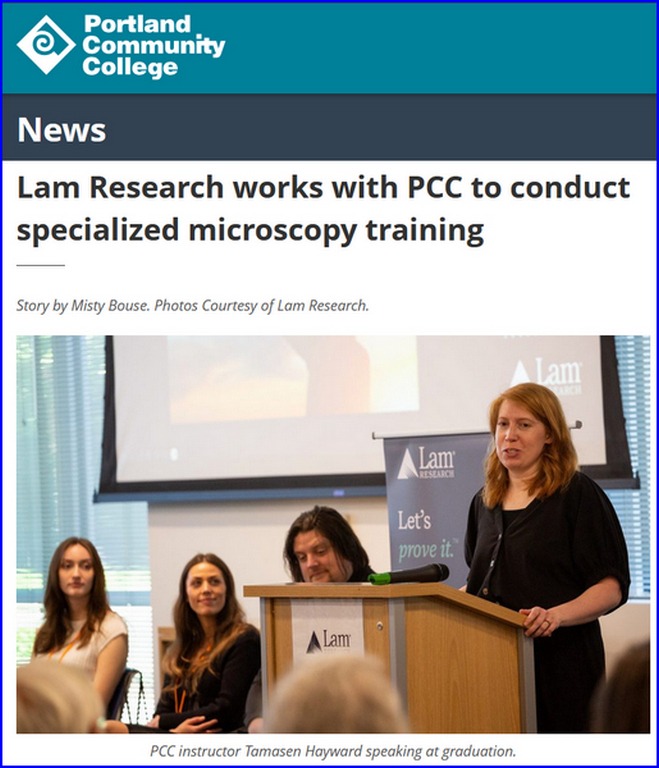
Portland Community College (PCC) and Lam Research have completed an important milestone in Oregon’s growing semiconductor workforce pipeline: the graduation of the first cohort of students from the new Microscopy Technician Training Program.
The eight-week program provided 40 hours of hands-on experience with advanced microscopy and inspection technologies used throughout semiconductor manufacturing (held at Lam’s Tualatin campus). Participants trained directly on scanning electron microscopes (SEMs) and other industry-relevant tools, gaining exposure to real-world workflows inside a semiconductor equipment company.
According to the PCC news article, the program began when Lam approached the college’s Microelectronics Technology Program to explore short-term training aligned with urgent technician needs. PCC’s Professional Development & Training (PDT) team then led development and implementation of the program in close collaboration with Lam experts.
Brian Clay, Global Operations Program Manager at Lam Research, emphasized that microscopy requires a “unique blend of specialized, highly technical skills, attention to detail, and creative problem-solving,” and noted this program “brought all those and more.”
Lam Research Foundation funding helps PCC broaden its STEAM Center programs, reaching students across the district with hands-on workshops in 3D printing, design, and rapid prototyping. Over 2,000 students have already benefited from these makerspace experiences.
Tualatin Mayor Frank Bubenik highlighted the program’s economic importance, noting that the computers and electronics sector is “more important to the Oregon economy than in any other state.”
With plans already underway for a second cohort in 2026, PCC reports that the PDT team will continue adapting workforce-aligned training as Oregon ramps up semiconductor education and technician development.
The Micro Nano Technology Education Center (MNT-EC) is pleased to announce that Billie Copley has been promoted to Center Director. Billie has served as Center Manager since the Center’s founding, working closely with Dr. Jared Ashcroft, Principal Investigator (PI) and overall leader of MNT-EC.
This promotion reflects Billie’s leadership, dedication, and growing role in guiding Center activities. Dr. Ashcroft will continue to provide strategic vision, build national partnerships, and shape the Center’s long-term direction as PI, while Billie expands her responsibilities as Center Director, ensuring strong coordination across projects, partners, and outreach efforts. Together, they will continue advancing the Center’s mission of supporting educators, students, and industry in micro and nanotechnology education.
“Working alongside Billie over the past several years has shown me just how committed she is to our mission. She has an incredible ability to connect with people, keep our projects moving forward, and ensure that everyone feels supported. Promoting her to Center Director is a natural next step, and I’m grateful we get to continue building MNT-EC together.” – Dr. Jared Ashcroft, Principal Investigator, MNT-EC
“Being part of MNT-EC since the beginning has been such a meaningful experience for me. I’m grateful for the trust and support of Jared, our team, and our partners, and I’m excited to keep building this work together. Stepping into the role of Center Director is both energizing and humbling, and I can’t wait to see what we accomplish next.” – Billie Copley, Center Director, MNT-EC
Two students from Pasadena City College (PCC) were among the select few undergraduate researchers presenting at the prestigious CAMPS 2025 Conference, hosted May 23–24 at Texas State University in San Marcos, Texas.
Supported by the NSF’s PREM (Partnerships for Research and Education in Materials) and MRSEC (Materials Research Science and Engineering Centers) programs, CAMPS brings together student researchers from across the country to present innovative work in materials science, biology, chemistry, and related fields.
While most attendees hailed from four-year institutions—a reflection of where PREM and MRSEC funding is typically centered—these two students from PCC stood out for their research contributions, poise, and academic rigor.
The participation of two-year students at CAMPS 2025 this year signals a noteworthy shift—one that points to the importance of fostering inclusive research pathways at all academic levels.
Poster Presentation: Safety of Brain Implants in Living Organisms
Carlton Mantovani: Pasadena City College | AT3 Internship Program | NSF PREM #2425226
Carlton’s research poster explored the neurological effects of brain microchip implants in animal models, particularly in rhesus macaques and sheep. His work focused on measuring whether such implants—used to study or even treat neurological diseases—cause long-term harm to cognitive function or brain tissue.
Using MRI imaging, behavioral Delayed Non-Matching-to-Sample (DNMS) tests, and biomarker analysis (GFAP and IBA-1 expressions), Carlton found no significant memory impairment or tissue damage. His findings suggest that brain implants could play a safe and influential role in neuroscience in the future.
“This type of advanced, interdisciplinary work is exactly the kind of research we want to see coming out of programs like AT3 and PREM,” PCC professor and student mentor, Dr. Jared Ashcroft, said. “Carlton’s results were well-documented and thoughtfully presented—it was a proud moment for our team.”
Poster Presentation: Pollution and Biodiversity at the Audubon Center
Phone (Morest) Myint Mo: Pasadena City College | Department of Natural Sciences
Morest’s research examined biodiversity loss due to urban air and noise pollution in two plots at the Audubon Center in California—Monarch Alley and Hummingbird C. By collecting data on air quality (PM2.5, PM10, VOCs), noise levels, and plant species counts (using iNaturalist and Shannon diversity index), the team discovered a clear correlation: the less polluted site had higher biodiversity and healthier vegetation.
His group used leaf area measurements of native oak species as indicators of physiological stress and found that air and noise pollution had a measurable adverse effect on these species.
Morest, a STEM tutor and Vice President of the Resilience Club at PCC, plans to transfer to UC Berkeley in Fall 2025 to pursue Molecular and Cellular Biology. He brings a deeply interdisciplinary perspective to science, linking biology, chemistry, and physics with real-world sustainability and public health issues.
A Sign of Progress
“To our knowledge, they were the only community college students presenting at the conference this year,” Dr. Jared Ashcroft said. “Their work was just as advanced and compelling as that of students from major research universities.”
As CAMPS continues to grow (this year marked only its third occurrence), participation from two-year institutions remains less common—but meaningful. The presence of these students at such a high-level national research forum reflects the increasing role community colleges are playing in shaping the future of science and innovation.
“We hope their stories inspire other students and institutions to aim high and pursue research opportunities that might once have seemed out of reach,” said Dr. Ashcroft.
Hosted by The Texas State University PREM Center for Intelligent Materials Assembly (CIMA) with 94 students from over 30 PREM and MRSEC institutions nationwide.
Included in the program:
Invited speaker series featuring four faculty and three industry presenters
Two rapid-fire oral presentation sessions (38 student presenters)
Two poster sessions (87 posters presented)
A career panel and industry networking lunch
A lab tour of Texas State’s Shared Research Operations, featuring demonstrations of SEM, TEM, EDS, and a nanofabrication clean room
CAMPS at a Glance content provided by Dr. Tania Betancourt, Professor of Chemistry and Biochemistry at Texas State and Director of the PREM Center for Intelligent Materials Assembly.
Ashley is an RDA process technician at Micron in Manassas, Virginia. Ashley describes her role in inspecting wafers for imperfections and ensuring high-quality chips. She works shifts from Wednesday to Saturday, earning a starting wage of $20-$25 per hour, with potential differentials for night shifts. Benefits include excellent healthcare and retirement plans. Ashley emphasizes the importance of communication and adaptability, crediting her community college education and internship at Micron for her success.
Show Notes
Ashley is an RDA process technician at Micron in Manassas, Virginia. Ashley describes her role in inspecting wafers for imperfections and ensuring high-quality chips. She works shifts from Wednesday to Saturday, earning a starting wage of $20-$25 per hour, with potential differentials for night shifts. Benefits include excellent healthcare and retirement plans. Ashley emphasizes the importance of communication and adaptability, crediting her community college education and internship at Micron for her success. She advises students to try new experiences and not be afraid to explore different career paths.
The Talking Technicians podcast is produced by MNT-EC, the Micro Nano Technology Education Center, through financial support from the National Science Foundation’s Advanced Technological Education grant program.
Opinions expressed on this podcast do not necessarily represent those of the National Science Foundation.
Join the conversation. If you are a working technician or know someone who is, reach out to us at info@talkingtechnicians.org.
Arman is a fabrication technician at Excelitas in Boulder, Colorado. Arman moved from Santa Clarita, California, and now earns around $50,000 annually. He grinds and polishes lenses for various applications, including commercial and military uses. Arman emphasizes the importance of detail, communication, and teamwork in his role. He transitioned from a warehouse job to a two-year laser optics program at Pasadena City College. Arman advises aspiring technicians to pursue their passions and seize opportunities.
Show Notes
Arman is a fabrication technician at Excelitas in Boulder, Colorado. Arman moved from Santa Clarita, California, and now earns around $50,000 annually. He grinds and polishes lenses for various applications, including commercial and military uses. Arman emphasizes the importance of detail, communication, and teamwork in his role. He transitioned from a warehouse job to a two-year laser optics program at Pasadena City College. Arman advises aspiring technicians to pursue their passions and seize opportunities.
The Talking Technicians podcast is produced by MNT-EC, the Micro Nano Technology Education Center, through financial support from the National Science Foundation’s Advanced Technological Education grant program.
Opinions expressed on this podcast do not necessarily represent those of the National Science Foundation.
Join the conversation. If you are a working technician or know someone who is, reach out to us at info@talkingtechnicians.org.
The pace of change in the semiconductor industry is nothing short of astonishing. This “freight train of change” impacts every aspect of the ecosystem—from how electrical circuits are designed (think AI and quantum computing) to the advent of multi-layered circuits enclosed in a single package. Each technological leap reshapes what the workforce must know and what educators must teach to prepare students for this rapidly evolving field.
A Changing Landscape: New Materials, Processes, and Demands
At the core of these advancements lie breakthroughs not only in circuit design but also in the very materials used to manufacture semiconductors. While silicon and gallium arsenide remain foundational, materials like carbon nanotubes, graphene, tellurium, and molybdenum are emerging as key players.
These advancements are driven by equipment manufacturers who continue to push the boundaries of operational capabilities and refine parametric constraints to meet the demands of smaller, faster, and more efficient chips. Workforce development agencies around the USA are diligently working to keep up with these advancements, as are educators who must adapt teaching methods to live in the ripple effect of so much change.
The Education System’s Critical Role
The semiconductor industry’s success hinges on an agile and adaptive education system. Educators must guide students to a deep understanding of emerging physics, chemistry, and materials science concepts while introducing them to the complexities of semiconductor devices and fabrication. Beyond simply teaching technical content, they must inspire curiosity and prepare students to thrive in an industry of continuous change.
The need for flexibility in the education system itself compounds this challenge. Administrative hurdles and lengthy review processes often bog down curriculum updates. To truly meet industry needs, educators need the freedom to:
Quickly incorporate new topics like carbon nanotube-based fabrication or AI-driven circuit design.
Deliver hands-on training in cleanroom protocols and advanced testing techniques.
Experiment with new teaching methods and delivery approaches tailored to complex content.
The stakes are high. Only by giving educators the tools, training, and support to respond swiftly and effectively can a workforce be created capable of steering this “freight train” of technological advancement.
Educator Challenges
I’m about to “preach to the choir.”
Educators live in a state of “unprecedented” change. That word gets bandied about often, but the reality is that teachers must not only teach but constantly and continually learn. Educators must grasp these concepts before introducing students to advanced materials or processes. This dual burden—learning and teaching—is intensified by the steep learning curve of entirely new technologies like extreme ultraviolet (EUV) lithography or chiplet architectures.
Additional challenges include:
Keeping Pace: We must find ways to help educators stay ahead when the knowledge landscape shifts constantly.
Building Partnerships: We need strong connections between community college faculty and industry professionals. That will also provide more access to new tools and better resources.
Systemic Barriers: Administrative requirements and funding constraints often slow the adoption of updated curricula (from the above two points), leaving gaps between industry needs and educational efforts.
Saying Yes to Change: The Only Way Forward
Change is hard. It’s uncomfortable, messy, and sometimes feels impossible in the face of overwhelming challenges. But if there’s one thing I know, it’s this: educators are some of the most resilient, adaptable, and resourceful people. Many have already stepped up—learning new content, experimenting with their teaching, and doing whatever it takes to prepare students for a fast-changing semiconductor industry.
The good news? Educators aren’t in this alone. Industry leaders are ready to lend a hand, offering partnerships, funding, and hands-on training opportunities to help bridge the gap between what’s needed and what’s possible. Together, we can tackle this. But we have to be willing to say “yes”—not cautiously but with confidence and a willingness to embrace the unknown.
So, where do we start?
Empower Educators: Give them the time, resources, and professional development opportunities they need to stay ahead of emerging technologies. They can’t teach what they don’t know—let’s make sure they have the know-how.
Streamline Curriculum Updates: Cut through the red tape. Make it easier for educators to update and adapt their courses to respond to industry needs as they arise. We don’t have time to wait.
Strengthen Partnerships: Build meaningful relationships between schools and industry. Let’s create a space where companies share what they need in their workforce, and educators translate that into real-world skills for students.
Encourage Innovation: Give educators the freedom to experiment. Whether using AR/VR to simulate cleanroom training or AI tools to teach circuit design, new approaches can make all the difference in preparing students for the future.
The train is already moving. The semiconductor industry isn’t slowing down, and neither should we. It’s time to get on board—not with hesitation, but with purpose and vision.
It Starts With Yes
The semiconductor industry’s future—and that of so many connected fields—depends on what we do today. And the truth is that educators are at the very heart of this transformation. Saying “yes” to change, collaboration, and bold ideas isn’t optional anymore—it’s necessary. In a future post, I’ll be sharing ideas for helping educators learn “faster.”
But that “yes” has to mean something. It’s not just a word. It’s action. It’s support.
Yes is breaking away from the comfort of “the way we’ve always done things” and trying something new, even if it feels risky. This rethinking is what true teaching looks like and how we can best prepare students for the opportunities waiting for them.
This isn’t just about keeping up. It’s about leading the way. The train is moving fast, but we can ensure everyone’s ready for the ride. Let’s say “yes” to change, and let’s mean it.
Learn more about Deb and her work in advanced technology.
Emily has had an extraordinary career, working with NASA and the White House before joining Intel. In this episode, she reflects on her journey through some of the most prestigious technical environments in the world. Emily shares how her passion for technology and mentorship drives her work and inspires others to pursue impactful careers in STEM fields.
Show Notes
In this episode of Talking Technicians, you’ll meet Emily, a facilities engineer at Intel. Emily shares her journey from community college to a full-time engineering role, discussing her experiences in the clean room, the challenges she faced as a woman in engineering, and the importance of soft skills and networking in her career. She emphasizes the diverse opportunities available in the semiconductor industry and offers valuable advice for aspiring technicians.
The Talking Technicians podcast is produced by MNT-EC, the Micro Nano Technology Education Center, through financial support from the National Science Foundation’s Advanced Technological Education grant program.
Opinions expressed on this podcast do not necessarily represent those of the National Science Foundation.
Join the conversation. If you are a working technician or know someone who is, reach out to us at info@talkingtechnicians.org.