


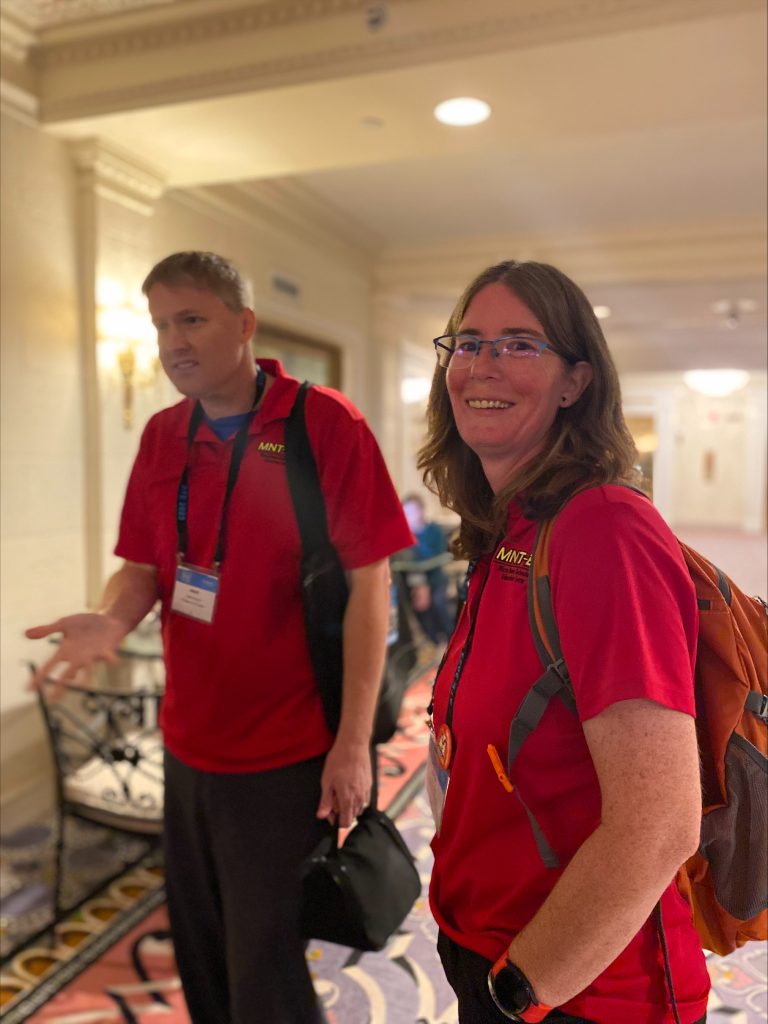
This is a joint post by Dr. Jared Ashcroft (PI) and Center Director, Billie Copley
Editor Note: Full 5 Year Summary Report: Five Years of Building Together is embedded for view and download at end of post.
1. Why This Moment Matters
Six years ago, we began building a national center to strengthen micro- and nanotechnology education and help more people see themselves in these fields. Our goal was practical, but the challenge was real: bring educators, industry, and students together to create real opportunities.
Reaching a five-year milestone offers an occasion to reflect—not as a conclusion, but as a checkpoint. This post isn’t meant to catalog every activity or outcome. Instead, it reflects on how the work evolved, how our role changed, and what we’ve learned as the Center moved from launch to national engagement. The past five years were defined by disruption, collaboration, and steady learning. Looking back helps clarify how we move with purpose over the next five years.
2. From Startup to Strategy: Years 1 and 2
In the early years, we worked to build a strong foundation despite tough conditions. Year 1 started during COVID-19, so staying connected and organized took extra effort. Learning Zoom was part of that and definitely made meetings more interesting. One of our first goals was to bring together existing micro- and nanotechnology centers under a shared plan, giving us a clearer national presence.
We also worked on setting up key systems to support educators and students. This meant mentoring early NSF ATE proposals, starting new ways to share information, and offering professional development that met immediate needs. From the beginning, we involved industry by forming a Business and Industry Leadership Team, which helped keep our work connected to real workforce needs.
In Year 2, we focused on growing and improving our work. We expanded access through new academic publishing, reached out to more people, and launched early workforce programs focused on inclusion. We also began to look more closely at how we measured our impact—not just by what we did, but by who participated, who had access, and what people learned. These years were about finding the right direction, not just getting bigger.
3. Growth and National Leadership: Years 3–5
As the Center grew, our role changed. In Years 3 to 5, we moved from building programs to making a difference at the national level, especially as workforce needs in semiconductors and advanced manufacturing became more urgent.
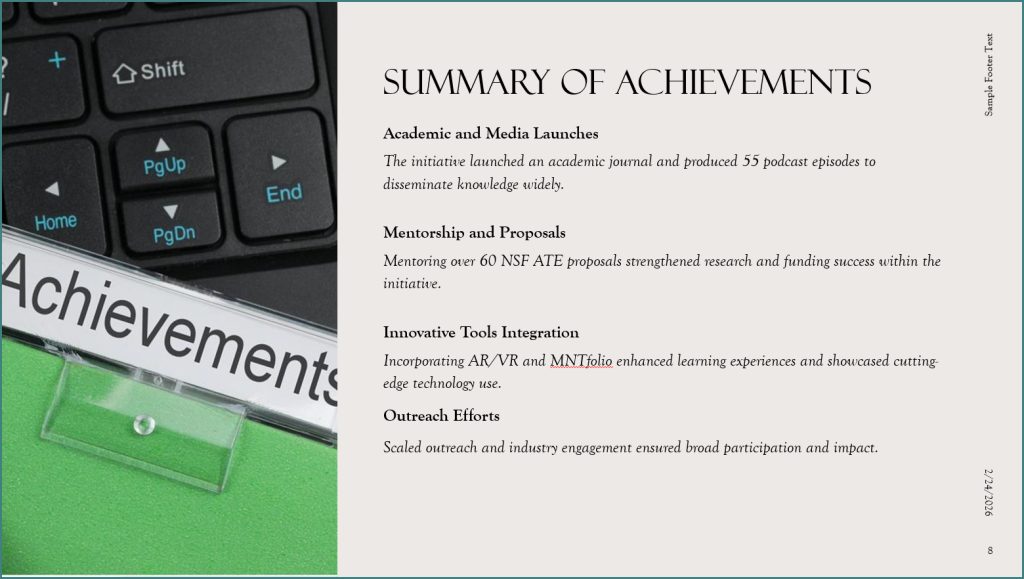
During this time, more people joined and more partnerships formed, but growth was not our only goal. We invested in new ways to improve learning, like using AR and VR tools for technician training. We made sure our programs supported access and representation, showing that belonging and excellence go hand in hand.
Our partnerships with schools and industry grew stronger, shaping how we developed curriculum and aligned with workforce needs. Listening to educators, students, and employers became even more important as our work grew. By Year 5, the Center was not just nationally recognized but also trusted. That trust came from working together and staying focused on what matters.
4. More than Numbers: What We Built
As we reached more people, we also built resources meant to last. Over five years, the Center set up publishing, mentoring, and communication systems to help educators share knowledge and improve their work. Journals, writing workshops, podcasts, and digital media gave faculty and technicians new ways to share their often-overlooked voices.
We also invest in tools that support hands-on learning and make things more accessible, drawing on advice from educators and industry experts. Workforce programs and paid internships gave students chances to use their skills, explore careers, and gain confidence.
All of this was possible because of the ongoing work of our leadership team, faculty partners, industry advisors, and staff who tried new ideas, adjusted programs, and stayed involved as things changed. Together, we created shared resources that can be used, adapted, and improved over time.
5. Lessons from the Journey
After five years, a few lessons stand out. First, building national capacity relies on trust. Momentum is important, but lasting impact comes from listening, making changes, and staying connected to what happens in classrooms and workplaces.
Second, industry partnerships are strongest when they last over time. Staying engaged helps shape curriculum, confirm skills, and respond to changing workforce needs.
Third, inclusion requires planning. Programs that aim to include more people work best when equity is built in from the beginning, not added later.
Finally, growth changes how we lead. As the Center grew, we needed greater coordination and shared decision-making. Our work moved from running projects to managing systems that others can count on.
6. Future Proof: The Next Chapter
Looking ahead, we want to keep what works and stay ready for change. Publications, workforce programs, and partnerships need ongoing attention to stay useful and effective.
In the next phase, we’ll work even more closely with education and industry partners, while paying attention to local needs. Supporting faculty, creating student pathways, and using new technologies will stay at the top of our list. This work builds on what we’ve already done and the partnerships that make it possible.
7. Closing: A Joint Mission
Five years in, this work is still about people: students finding new opportunities, educators improving their teaching, and partners working together for a shared future.
We are grateful to the leadership team, faculty, industry partners, and collaborators who helped shape this effort. Our progress so far shows our shared commitment and responsibility. As we move forward, we know the most important work is still ahead, shaped by this community and its ongoing teamwork.